


What Is an HS Code and How to Find It for Exports
Every item shipped abroad has an "ID number" in the eyes of customs. That number is the HS Code. Choosing the wrong one can get a parcel held or taxed incorrectly.
An HS Code is a goods classification code used by customs worldwide to identify the type of goods being exported or imported. HS stands for Harmonized System, a numbering system developed by the World Customs Organization (WCO) and used by more than 200 countries.
Customs uses the HS Code to determine import duty, taxes, and special rules for a product. That's why the right HS Code matters for anyone shipping goods for sale abroad, including small businesses.
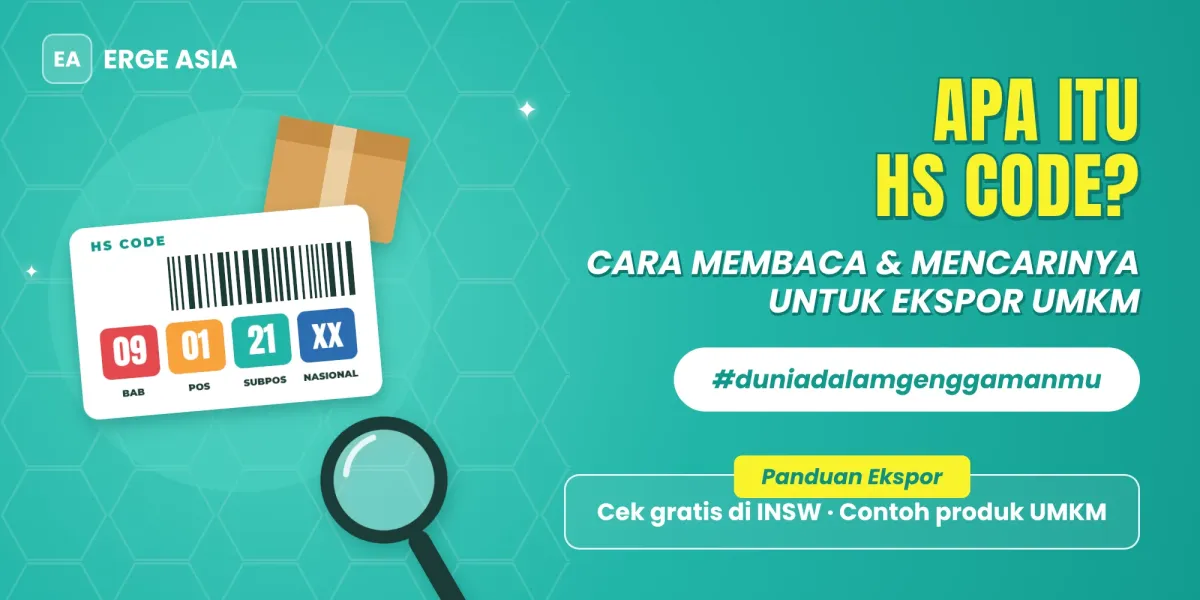
How to Read an HS Code
The longer the code, the more specific the product.
| Level | Digits | Example (coffee) | Used in |
|---|---|---|---|
| Chapter | 2 digits | 09 · Coffee, tea, spices | Worldwide |
| Heading | 4 digits | 0901 · Coffee | Worldwide |
| Subheading | 6 digits | 0901.21 · Roasted coffee, not decaffeinated | Worldwide |
| National tariff line | 8 digits | Further detail per the national tariff book | Indonesia and ASEAN |
How to Check an HS Code on INSW
Free and open to anyone, no account needed.
Open the INSW Portal
Visit the Indonesia National Single Window (INSW) website and open the commodity search service (INTR).
Type a Name or Code
Enter the product name in Indonesian, such as "kopi" (coffee) or "pakaian" (clothing), or type an HS code you already know.
Choose the Closest Match
Compare the descriptions in the results. Pick the code that best matches your product's material, function, and form.
Click Details
The details page shows the tariff and any prohibition or restriction rules for that code.
Besides INSW, you can also search the Indonesian Customs Tariff Book (BTKI) on the Customs website or the HS list on the Ministry of Trade portal.
HS Code Examples for Popular SME Products
Examples at heading level (4 digits) as a starting point.
| Product | HS heading | Heading description |
|---|---|---|
| Ground and roasted coffee | 0901 | Coffee |
| Tea | 0902 | Tea |
| Sambal and soy sauce | 2103 | Sauces and preparations, mixed seasonings |
| Fruit chips and processed nuts | 2008 | Fruit, nuts, and other plant parts, prepared |
| Men's cotton batik shirts | 6205 | Men's or boys' shirts |
| Cotton batik fabric | 5208 | Woven fabrics of cotton |
| Woven rattan crafts | 4602 | Basketwork |
| Bar soap | 3401 | Soap |
Tips for Choosing the Right HS Code
To avoid misclassification.
- Start with material and functionHS Codes are organized by material, process, and use, not by brand or trade name.
- Separate different productsA parcel with coffee and T-shirts needs two different HS Codes on the invoice.
- Keep it consistent across documentsUse the same HS Code on the invoice, packing list, and shipment description.
- Ask your buyerBuyers or importers in the destination country usually know the code they use for similar goods.
Where Is the HS Code Written?
Places that usually require an HS Code.
- The commercial invoice, in each item's description
- The packing list for shipments with multiple item types
- The export declaration for large commercial shipments
- Supporting documents such as a Certificate of Origin
See where to put it in our guide on commercial invoice and packing list examples. To estimate taxes at the destination, check import duty and tax-free limits by country.
See HS Codes applied to coffee and tea in our guide on sending coffee and tea abroad.