





Commercial Invoice & Packing List, Explained with Examples
These two documents decide how quickly your business shipment clears customs in the destination country. Learn what goes in them, how to fill them out, and the most common mistakes.
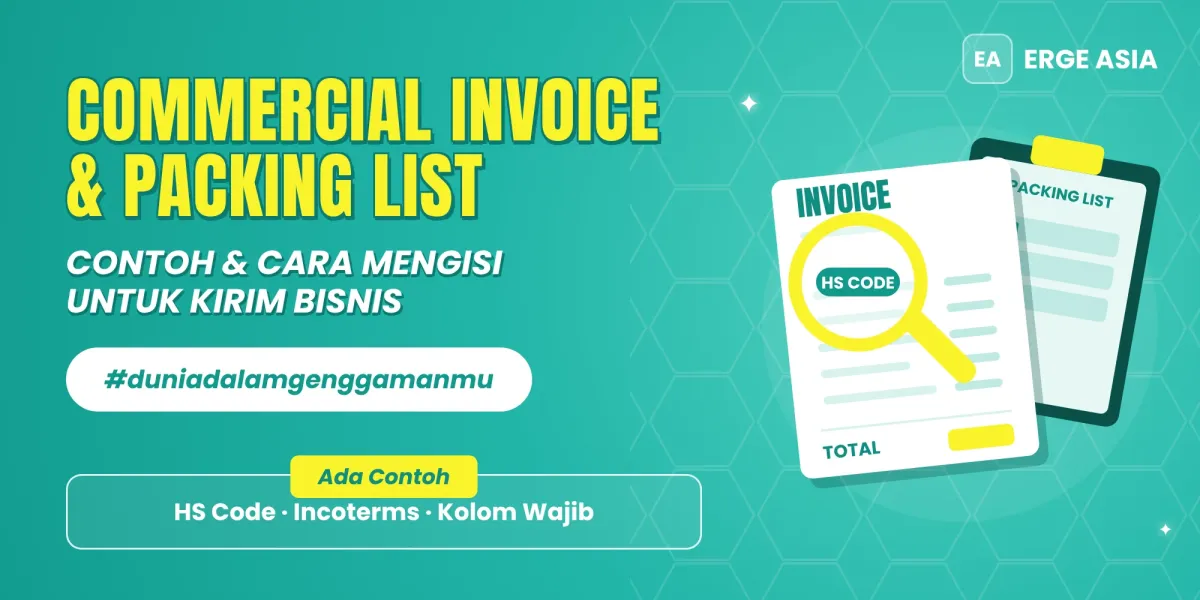
A commercial invoice is the official bill from a seller to a buyer abroad, and customs uses it to assess the value of goods, import duty, and taxes. Its partner, the packing list, describes the contents of each box along with its weight and dimensions.
For businesses starting to ship orders overseas, these documents can feel complicated. In fact they're simple once you know which fields are required. This article explains what each document does, shows how to fill them in, and shares tips to avoid holds.
Commercial Invoice vs Packing List: What's the Difference?
They complement each other; one doesn't replace the other.
- Focuses on value and the transaction
- Includes unit prices, total value, and currency
- Basis for calculating import duty and taxes
- Signed by the seller or shipper
- Focuses on the physical goods
- Lists each box's contents, quantity, weight, and dimensions
- Makes physical inspection easier for officers
- Usually without prices
Required Fields in a Commercial Invoice
Make sure all of this is present and consistent with your shipment data.
| Field | What to Enter |
|---|---|
| Invoice number & date | A unique number and the issue date |
| Shipper / Exporter | Business name, full address, phone number, and email of the shipper |
| Consignee | Name, full address, and phone number of the recipient in the destination country |
| Description of goods | Specific item name, material, and purpose |
| HS Code | International product classification code, at least 6 digits |
| Country of origin | Where the goods were made, e.g. Indonesia |
| Quantity & unit | E.g. 20 pcs, 5 boxes, 3 kg |
| Unit price & total | Value per item, total per line, and grand total |
| Currency | Usually USD or the agreed currency |
| Incoterms | Who pays shipping and import duty, e.g. DAP or DDP |
| Reason for export | Sale, gift, sample, or return |
| Signature | Name and signature of the shipper declaring the data is correct |
Commercial Invoice Example
The data below is fictional, for illustration only.
| Description | HS Code | Qty | Unit Price | Total |
|---|---|---|---|---|
| Cotton batik shirt, men | 6205.20 | 10 pcs | USD 15.00 | USD 150.00 |
| Cotton batik fabric, 2 m | 5208.52 | 5 pcs | USD 12.00 | USD 60.00 |
| Total value · Country of origin: Indonesia | USD 210.00 | |||
Packing List Example
Each box's contents must match the commercial invoice.
| Box | Contents | Qty | Net Weight | Gross Weight | Dimensions (cm) |
|---|---|---|---|---|---|
| 1 / 2 | Cotton batik shirt, men | 10 pcs | 3.0 kg | 3.5 kg | 40 × 30 × 20 |
| 2 / 2 | Cotton batik fabric, 2 m | 5 pcs | 2.0 kg | 2.4 kg | 35 × 25 × 15 |
Box size also affects shipping cost through volumetric weight. Learn the calculation in how to calculate volumetric weight.
Common Incoterms for Parcels
They decide who pays costs in the destination country.
DAP (Delivered at Place)
The seller covers shipping to the destination, while import duty and taxes there are paid by the buyer.
DDP (Delivered Duty Paid)
The seller covers shipping as well as import duty and taxes, so the buyer simply receives the goods.
Shipments to Taiwan, Singapore, and Malaysia with Erge Asia are labeled tax-free. For other countries, check the limits in import duties and tax-free limits by country.
Mistakes That Get Shipments Held
Avoid these when filling out your documents.
- Descriptions that are too vagueWords like "goods", "clothes", or "gift" alone aren't enough. State the type of item and its material.
- Unrealistic valuesA value that's too low can raise suspicion and lead to longer inspections. Declare the real price.
- Inconsistent dataQuantities, weights, and the recipient's name must match across the invoice, packing list, and shipment data.
- Missing HS Code or country of originCustoms uses both to set the duty rate and apply trade facilities.
- Restricted items listedCheck the destination's rules first. Items like medicine, certain cosmetics, and batteries have special rules.
Also read rules for sending medicine abroad and how to ship electronics and batteries.
Shipping Business Goods with Erge Asia
Prepare your data before creating a shipment.
For personal shipments, simply describe the contents and value in detail when creating the shipment in your Erge Asia account. For business or large shipments, prepare a commercial invoice and packing list from the start, then ask our team which documents your destination requires.
To keep your goods safe on the way, read how to pack items for international shipping.
Questions About Commercial Invoices & Packing Lists
Quick answers to the questions our team hears most often.