
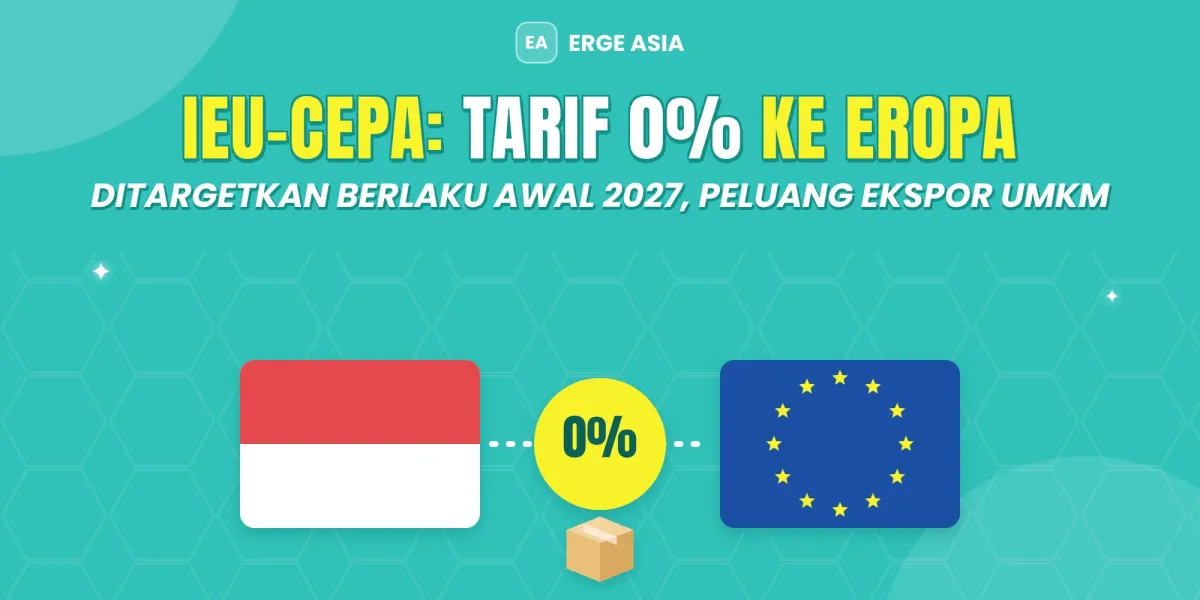
After almost a decade of negotiations, the Indonesia–European Union Comprehensive Economic Partnership Agreement (IEU-CEPA) has reached its final stage. Signing of the agreement text is scheduled for 21 November 2026 in Brussels, and the government targets entry into force in early 2027 after ratification.
IEU-CEPA Timeline
Substantial Conclusion
Indonesia and the EU signed the substantial conclusion of negotiations in Bali.
Legal Review & Translation
The text is legally reviewed and translated into the EU's official languages.
Signing in Brussels
An Indonesian delegation led by the Trade Minister is scheduled to sign the agreement text.
Target Entry into Force
After ratification by the Indonesian and EU parliaments, the agreement is targeted to take effect.
What's in It for Indonesian Exporters?
90.4% of Tariff Lines at 0% Immediately
90.4% of Indonesia's export tariff lines to the EU will enjoy 0% import duty as soon as the agreement takes effect.
On entry into forceKey Products
Palm oil and derivatives, textiles, footwear, and rubber products are among those getting 0% tariffs.
The EU market spans 27 countries, including the Netherlands, Germany, Belgium, France, and Austria. For SMEs, lower tariffs make products such as fashion, handicrafts, coffee, and processed food more price-competitive.
What SMEs Can Prepare Now
- Know your product's HS codePreferential tariffs are set per tariff line. Read how to find an HS code.
- Learn the rules of originTariff benefits usually require proof that the product really originates from Indonesia.
- Meet European product standardsThe EU has strict rules on labelling, food safety, and materials.
- Start with sample shipmentsSend samples to prospective buyers in Europe before large orders.
Also read shipping to the Netherlands, shipping to Germany, and how SMEs can start exporting.