

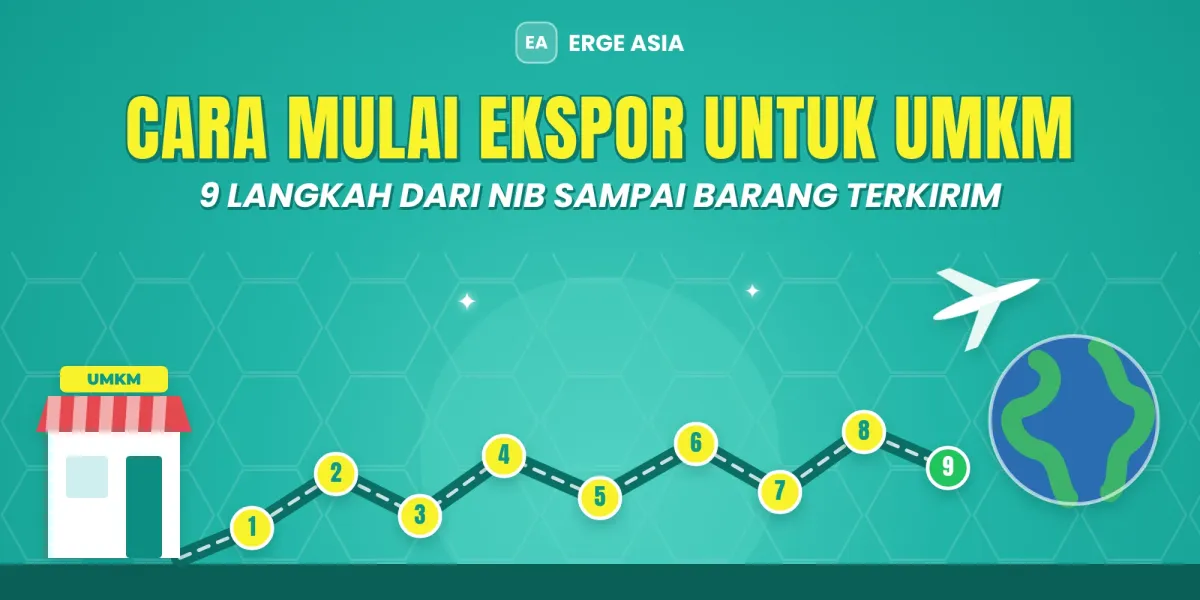
How Small Businesses Can Start Exporting, from NIB to Goods Delivered
Exporting is no longer just for big companies. With simple business registration, tidy documents, and an international shipping service, small businesses can start selling abroad on a small scale.
Many small business owners put off exporting because they imagine it's complicated, expensive, and requires a limited company (PT). In fact, exporting can start with small steps: sending samples to potential buyers, fulfilling a first small order, then growing gradually.
This guide breaks the export process into nine sequential steps, from choosing a product and market, handling business registration, pricing, and finding buyers, to preparing documents, shipping, and getting paid. Each step links to a more detailed guide.
9 Steps for Small Businesses to Start Exporting
The big picture before diving into each step.
- Choose a product and destinationFind a product in demand and a market whose rules you can meet.
- Handle business registrationAt least an NIB and tax ID (NPWP), plus product permits if needed.
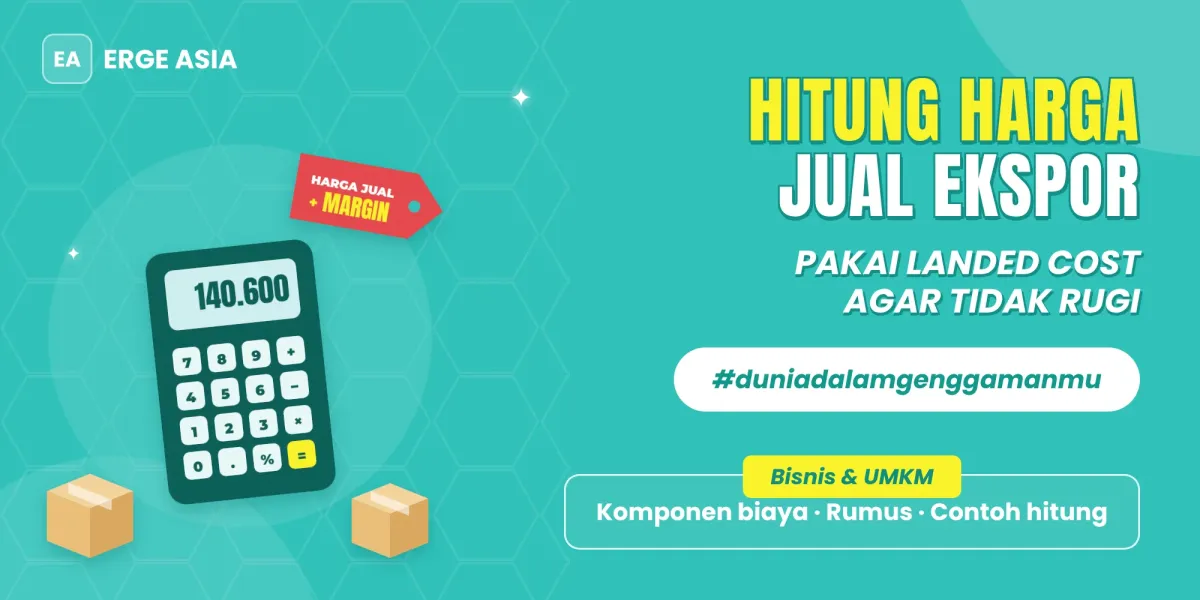
- Calculate your export priceInclude every cost and agree on delivery terms.
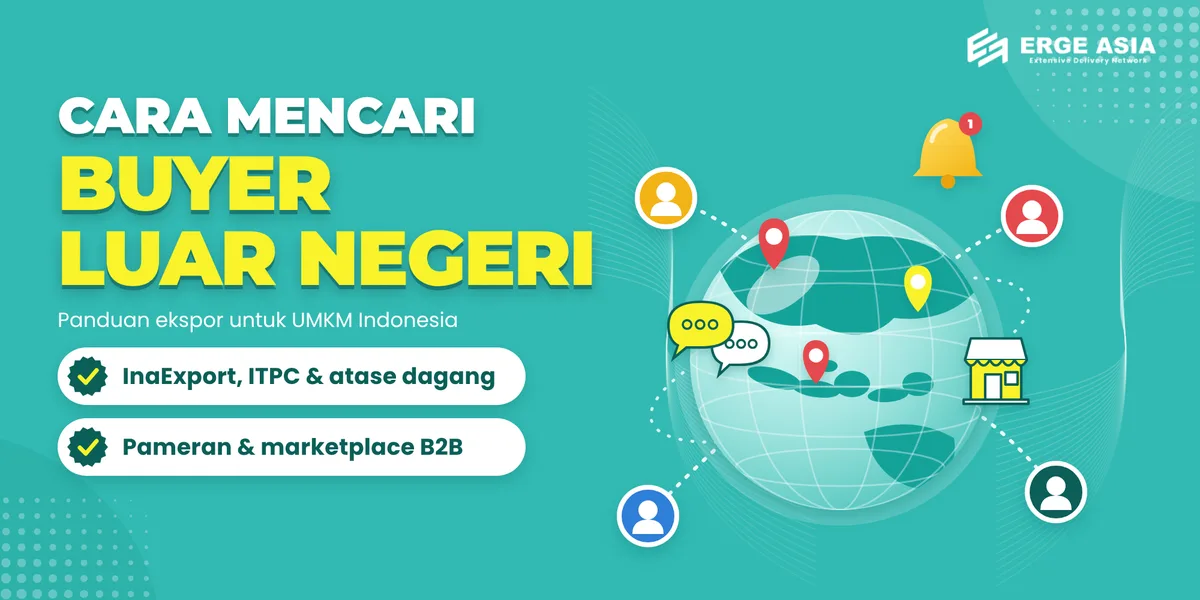
- Find buyersThrough marketplaces, trade fairs, diaspora networks, or government programs.
- Prepare packaging and labelsAdapt them to the destination's rules and language.
- Complete export documentsInvoice, packing list, HS Code, and supporting certificates.
- Choose a shipping methodInternational courier for small shipments, cargo for large volumes.
- Get paid safelyChoose a payment method that protects you as the seller.
- Review and growRecord costs and issues from your first shipment to improve.
Choose a Product and Destination
Successful exporting starts with simple but honest research.
Start with a product that already sells well locally and that you can produce at consistent quality. Signature Indonesian products like coffee, tea, spices, dry snacks, batik, modest wear, rattan crafts, and body care products have strong potential abroad.
Then pick one or two destination countries first. Consider three things: is there demand for your product, how strict are that country's import rules for your product type, and how much does shipping cost. Countries with large Indonesian diaspora communities, such as Malaysia, Singapore, Taiwan, and Hong Kong, often make good first markets.
Business Registration: You Don't Need a PT to Export
Even sole proprietors and micro businesses can export.
| Registration | Role in exporting | How to get it |
|---|---|---|
| NIB (Business Identification Number) | Business ID that also serves as customs access | Free via the OSS system, available to sole proprietors |
| NPWP (tax ID) | Tax identity of the business owner | Through the tax office services |
| Product permits or certificates | Required for certain products, such as processed food or cosmetics | Relevant agency depending on product type |
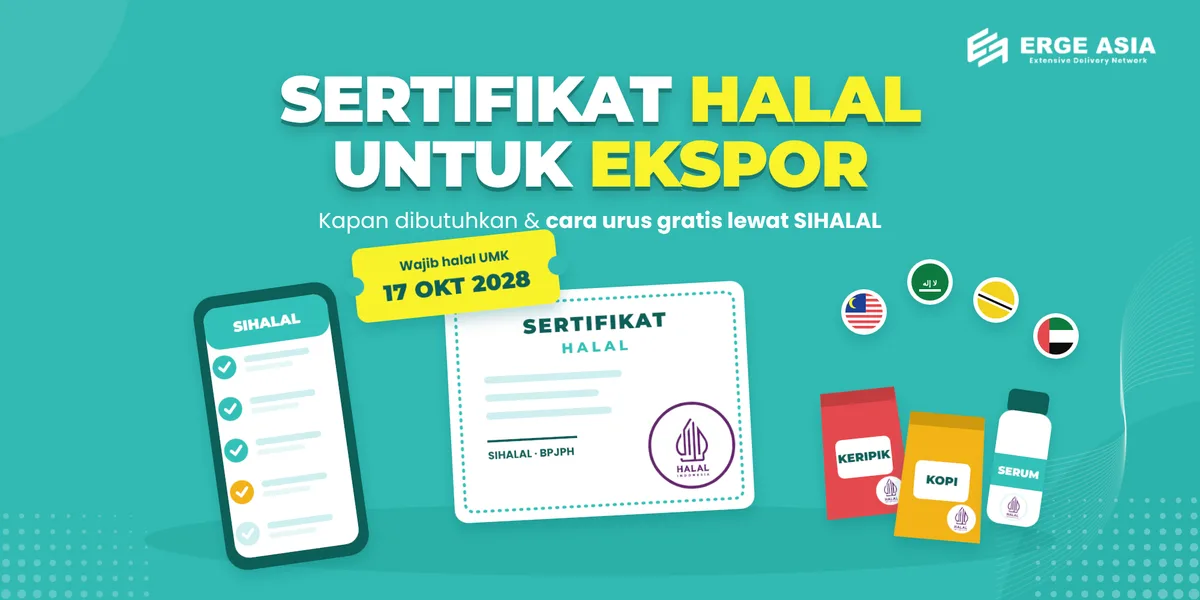
| Halal certificate | Added value for Muslim markets such as Malaysia and the Middle East | Halal certification body |
At the start, an NIB and NPWP are enough to send samples and small orders. Additional product permits are usually only needed when the buyer or destination country requires them, so ask potential buyers early on.
Calculate Your Export Price Correctly
An export price isn't just your local price plus shipping.
A common mistake is forgetting small costs that add up. Build your price from these components:
- Production cost per unit
- Export packaging and extra labels
- Document and certificate costs
- International shipping, charged on actual or volumetric weight
- Duties and taxes at the destination, if you cover them
- Transfer fees or payment commissions
- Profit margin
Learn to calculate shipping costs in how to calculate volumetric weight, and check estimated rates by country on the shipping rates page.
Also agree with the buyer on who bears the costs and risks at each stage. These rules are called Incoterms. The four most common:
| Incoterms | What it means, simply | Good for |
|---|---|---|
| EXW | The buyer collects the goods from you and pays all shipping costs | Buyers who already have a shipping agent |
| FOB | You cover costs until the goods are loaded onto the ship at the origin port | Sea freight exports |
| CIF | You cover costs, insurance, and freight to the destination port | Buyers who want a price delivered to their country |
| DDP | You cover everything, including destination taxes, until the goods are received | Direct sales to consumers |
Find Buyers Abroad
The four channels small businesses use most.
International Marketplaces
List products on marketplaces that reach overseas buyers, both retail and wholesale.
Diaspora Networks
Indonesian communities abroad are often the first buyers and resellers.
Government Programs
The Ministry of Trade and Indonesian trade offices abroad regularly hold trade fairs and business matchmaking.
Your Own Online Store
A website and social media in English help overseas buyers find you.
Prepare Export Packaging and Labels
Packaging must withstand long journeys and meet destination rules.
Export packaging has two jobs: protecting the product in transit and meeting the destination's labeling rules. For protection, use double-walled boxes, fill empty space, and seal liquids tightly. See the full guide in how to pack goods for international shipping.
For labels, many countries require information in the local language or English, such as product name, ingredients, net weight, country of origin ("Made in Indonesia"), expiry date, and manufacturer name. Ask the buyer whether they need a specific label format.
Complete Export Documents
Tidy documents are the key to clearing inspection.
| Document | When it's needed | Guide |
|---|---|---|
| Commercial invoice | Every shipment of goods for sale | Invoice example |
| Packing list | Shipments with several item types or many packages | Packing list example |
| HS Code | Listed on the invoice for each item type | How to find HS Codes |
| Certificate of Origin (SKA) | If the buyer wants duty relief under a trade agreement | Issued by the certificate of origin authority |
| Quarantine certificate | Animal, plant, or certain food products, depending on the destination | Indonesian Quarantine Agency |
For small shipments via an international shipping service, export customs declarations are usually handled with the provider's help. For large-volume exports, you'll need your own export customs documents, usually with a customs broker's help.
Choose the Right Shipping Method
No single method is cheapest in every situation.
- Suited to samples and small orders up to tens of kilograms
- Door to door, with home pickup
- Trackable with a tracking number
- Simpler customs handling
- More economical for volumes of hundreds of kilograms or more
- Requires complete export customs documents
- Usually delivered to the destination port or airport
- Longer preparation time
Most small businesses start with an international courier. Erge Asia ships to many countries with home parcel pickup, and shipment status can be followed on the track shipment page.
Get Paid Safely
Protect yourself in your first transaction.
Payment Upfront
Safest for new sellers. Ask for full payment or a deposit before shipping.
Bank Transfer
Common for business-to-business deals. Watch out for international transfer fees and exchange rates.
Letter of Credit
Bank-guaranteed and suited to large transactions, but the process is more complex.
Review Your First Shipment
Your first order is your best lesson.
Once the goods arrive, record every actual cost and compare it with your original calculation. Ask the buyer about the condition of the goods on arrival and get feedback on packaging. If the parcel was held, find out why in our guide on parcels held by foreign customs, and understand shipment statuses in the meaning of international tracking statuses.
5 Common Mistakes Beginner Exporters Make
Learning from others' experience is cheaper.
- Declaring values too lowThe intent is to lower the buyer's taxes, but it often causes longer inspections or held parcels. Declare the real value.
- Item descriptions that are too vagueWords like "sample" or "mixed goods" raise suspicion at customs. Specify each item's type, material, and quantity.
- Not checking destination rulesA product allowed in one country can be banned in another, especially animal-based food, medicine, and cosmetics.
- Forgetting volumetric weightLight but bulky products can cost far more than expected if packaging isn't efficient.
- Shipping large volumes right awayTest with samples or small orders first to make sure the product, packaging, and documents are right.
Guides by Product Type
Each product type has its own rules and packing methods. Read the guide for your product before accepting your first order.
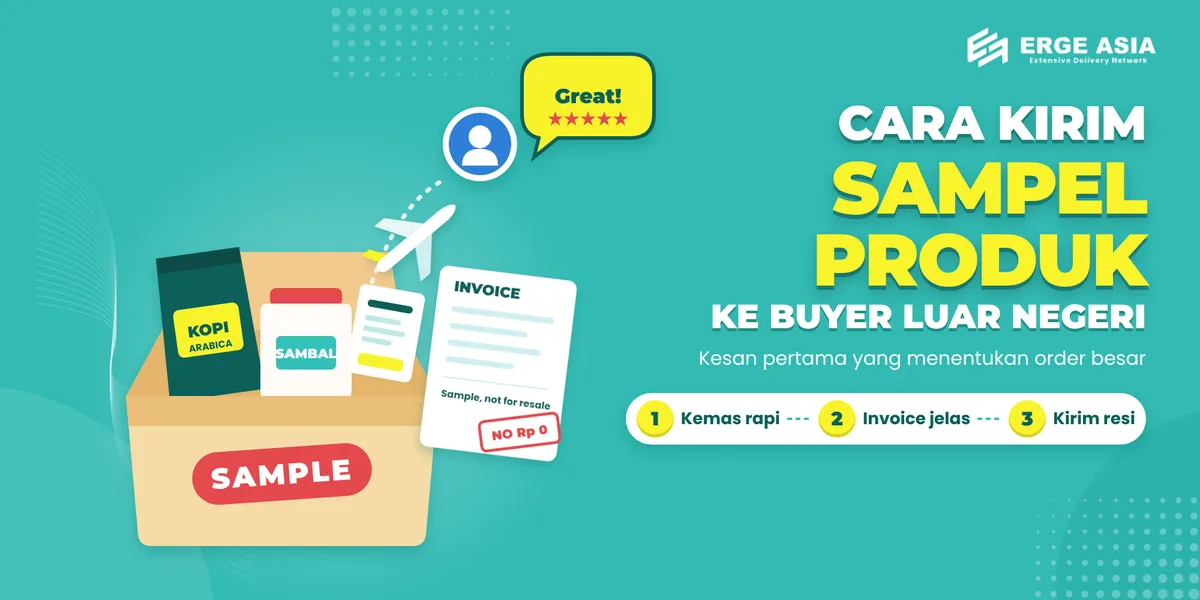
Read before shippingStart with Samples
Send samples first to test the market with little risk.
- Sending coffee and tea abroad
- Sending clothes and batik abroad
- Sending food abroad
- Sending skincare and cosmetics abroad