





Air Freight vs Sea Freight: Which Is Cheaper for Exports?
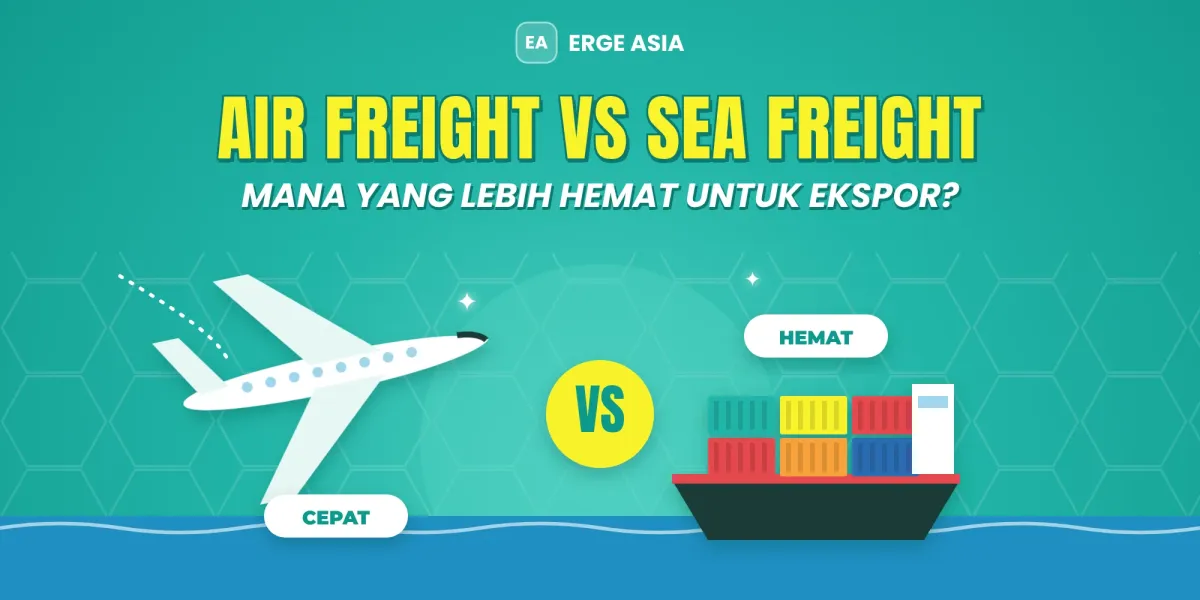
Air cargo is fast but costly per kilogram. Sea cargo is cheap for large volumes but slow, with many extra costs. The right choice depends on weight, volume, and how quickly the goods need to arrive.
Once overseas orders start growing, many small businesses ask: is it cheaper to ship by air or sea? The answer isn't always sea. For small shipments, sea cargo can actually cost more because of its high fixed costs.
This article compares air freight and sea freight in terms of cost, time, weight calculation, and type of goods, then gives a rough idea of when to switch from one to the other.
What Are Air Freight and Sea Freight?
The two main routes for shipping exports.
Air freight means shipping goods by plane, either as air cargo or through an international courier. Sea freight means shipping goods by ship, usually in containers.
Sea cargo has two container options. FCL (Full Container Load) means you rent a whole container. LCL (Less than Container Load) means your goods share a container with other shippers' goods, so you only pay for the space you use.
Air Freight vs Sea Freight
Pros and cons of each.
- Fast, usually within days
- Suited to samples and small to medium shipments
- Door to door via international couriers
- More expensive per kilogram for large volumes
- Stricter dangerous goods rules
- Slow, usually within weeks
- Economical for large volumes and heavy goods
- Usually delivered to port, not including delivery to the address
- Many fixed costs such as port and document fees
- Requires longer stock planning
How Chargeable Weight Is Calculated for Air and Sea
This is why the two are hard to compare directly.
| Route | Billing basis | Common formula |
|---|---|---|
| International courier | Higher of actual weight and volumetric weight | L × W × H (cm) ÷ 5,000 |
| Air cargo | Higher of actual weight and volumetric weight | L × W × H (cm) ÷ 6,000 |
| Sea cargo LCL | Higher of volume (CBM) and weight (tons) | 1 CBM is treated as 1,000 kg |
| Sea cargo FCL | Price per container | Fixed, as long as the load stays within container limits |
CBM (cubic meters) is length × width × height in meters. A 50 × 40 × 40 cm box, for example, is 0.08 CBM. Volumetric weight is fully explained in our guide on how to calculate volumetric weight.
A Rough Guide to When Air or Sea Is Cheaper
The figures below are a general picture, not fixed thresholds.
| Shipment size | Usually cheaper option | Notes |
|---|---|---|
| Samples up to tens of kilograms | International courier (air) | Door to door, simple documents |
| Around 100 kg to a few hundred kilograms | Air cargo or multi-parcel courier | Compare quotes; sea is often not yet cheaper due to fixed costs |
| From around 1 to 2 CBM | Sea LCL becomes worth comparing | Also count port fees and delivery in the destination |
| Around 15 CBM or more | Consider FCL | A 20-foot container holds about 33 CBM |
Commonly Forgotten Costs in Sea Freight
Cheap ocean freight doesn't always mean a cheap total.
- Port fees at origin and destinationIncluding container terminal handling charges.
- Document and customs clearance feesCargo exports require full customs documents, usually handled by a customs broker.
- Land transportFrom your warehouse to the port, and from the destination port to the buyer's address.
- Storage if collected lateGoods not cleared in time at the destination port may incur daily storage fees.
- Duties and taxes at the destinationApply to both air and sea, depending on who bears them under your agreement.
Which Goods Suit Air or Sea?
Besides cost, the nature of the goods matters.
Best by Air
High-value, light, fragile, or short shelf-life goods, or anything needed quickly such as samples and customer orders.
Best by Sea
Heavy, bulky goods with low value per kilogram, such as furniture, wooden crafts, and wholesale stock that isn't urgent.
Start Exporting with an International Courier
For samples and early orders, a door-to-door international courier is the most practical option. Erge Asia ships to many countries with pickup service and trackable shipments.
Door to doorLarge Volumes?
Discuss your shipping needs with the Erge Asia team.
Check rates by country on the shipping rates page. Also prepare a commercial invoice and packing list and the correct HS Code for both air and sea shipments.