





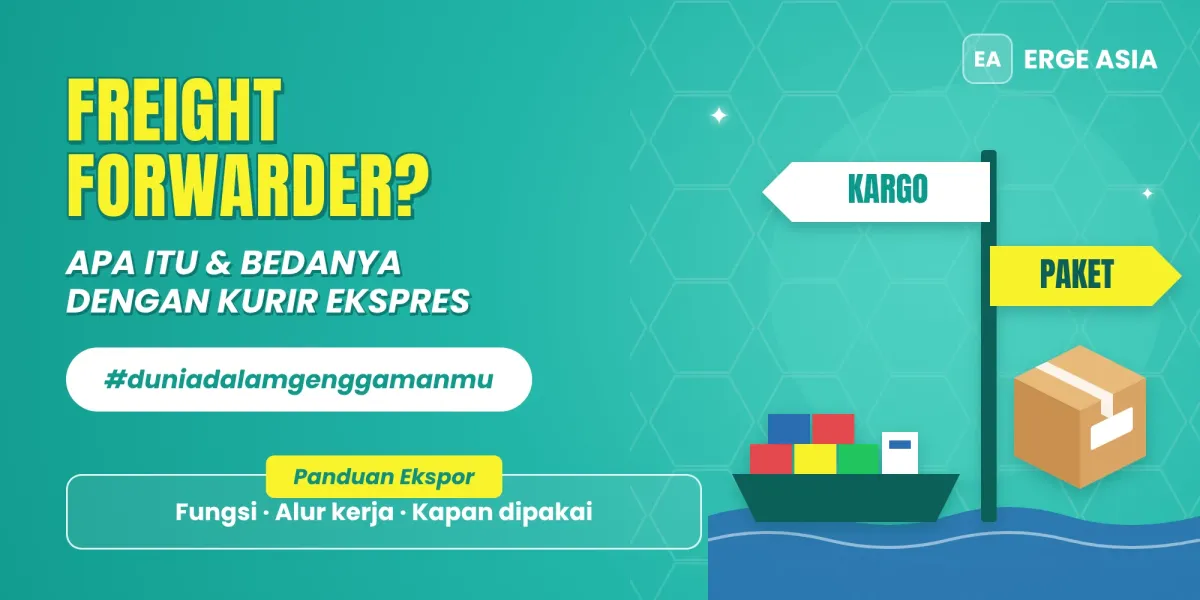
What Is a Freight Forwarder? How It Differs from an Express Courier
Freight forwarders and express couriers both ship goods abroad, but they differ greatly in how they work, the documents involved, and cost. Know both so you choose the right service.
The term freight forwarder often comes up when small businesses start receiving large export orders. For small shipments, on the other hand, most people use an express courier that picks up the parcel and delivers it to the recipient's door.
The two do not replace each other. This article explains what a freight forwarder is, its functions, how it works, how it differs from an express courier, and when to use each.
Functions of a Freight Forwarder
A forwarder handles almost everything between your warehouse and the buyer's warehouse.
Booking Cargo Space
Books space on ships or aircraft, chooses routes, and negotiates rates with carriers.
Shipping Documents
Prepares or checks documents such as the bill of lading, air waybill, invoice, and packing list.
Customs Clearance
Handles export at origin and import at destination, either directly or with a licensed customs broker.
Cargo Consolidation
Combines goods from several shippers in one container so each shipper pays less.
Warehousing & Trucking
Provides temporary storage and trucks from the warehouse to the port or airport.
Cargo Insurance
Helps arrange insurance so the risk of damage or loss in transit is covered.
How a Freight Forwarder Works
An overview of a cargo export through a forwarder.
Request a Quote
You provide details of the goods, weight, volume, origin, destination, and the shipping terms agreed with the buyer.
Booking & Pickup
The forwarder books cargo space, then the goods are collected from your warehouse and taken to a consolidation warehouse or port.
Export Documents & Customs
Export documents are processed and the goods are inspected before loading onto the ship or aircraft.
Main Carriage
The goods depart. You receive a bill of lading or air waybill as proof of shipment.
Import Customs & Delivery
At the destination, the goods clear import customs and are delivered to the buyer, according to the agreed scope of service.
Freight Forwarder vs Express Courier
A summary of the differences shippers notice most.
| Aspect | Freight forwarder | Express courier |
|---|---|---|
| Shipment size | Large cargo, pallets, up to full containers | Documents and parcels, usually per piece |
| Mode | Sea, air, land, or a combination | Mostly air |
| Transit time | A few days (air) to several weeks (sea) | A matter of days |
| Coverage | Port to port or door to door | Door to door |
| Documents | Full set: invoice, packing list, B/L or AWB, customs documents | Simpler, usually just shipment details and an invoice |
| Price | Quoted per shipment, with many cost components | Clear per-kg rate from the start |
| Tracking | By stage, often via reports from the forwarder | A tracking number you can check any time |
| Best for | Regular exporters with large volumes | Small businesses, personal shoppers, samples, and retail orders |
In short, a forwarder is a logistics organizer for cargo, while an express courier is a parcel delivery service bundled into one price. The transport modes are compared in our article on air freight vs sea freight.
Common Freight Forwarding Terms
Know these terms before requesting a quote.
When to Use a Forwarder vs an Express Courier
Choose based on shipment size, timing, and document readiness.
- Shipments are already in the hundreds of kilograms or several CBM
- The buyer is an importer asking for terms like FOB or CIF
- The goods are not urgent and per-kg cost must be kept low
- You are ready with complete export documents
- Sending samples, retail orders, or personal shopping items
- You want goods picked up and delivered to the recipient's door
- You need speed and a clear per-kg cost from the start
- You are new to exporting and do not yet have cargo documents
Many small businesses start with an express courier, then move to a forwarder once orders become regular and volumes grow. The first steps are in our guide on how small businesses can start exporting.
Tips for Choosing a Freight Forwarder
Compare more than one quote before deciding.
- Check the company's legal statusMake sure the company is officially registered and holds the right business licence for logistics services.
- Ask for a full cost breakdownAsk about every component: freight, port or airport charges, documents, customs, and delivery at destination.
- Confirm the scope of servicePut in writing where the forwarder's responsibility ends and who pays taxes in the destination country.
- Ask about route and product experienceForwarders used to similar routes and goods know destination rules better.
- Look at communication and trackingChoose one that updates you at every stage and is easy to reach when problems arise.
Shipping Parcels? Use a Door-to-Door Courier
For samples, retail orders, and personal shopping, Erge Asia ships parcels to many countries with pickup service, clear per-kg rates, and tracking numbers you can check any time.
Door to doorLarge Volume?
Discuss your shipping needs with the Erge Asia team.
Check rates by country on our shipping rates page, and prepare a commercial invoice and packing list for business shipments.